Why Your Map Tracker Shows You Winning While Your Phone Stays Silent
You log in to your dashboard and see it: a beautiful, shimmering grid of green dots. Your google maps rank tracker tells you that you are sitting at #1, #2, and #3 across your entire service area. By all accounts, you are dominating the local market. Yet, when you look at your desk, the phone isn’t ringing. Your staff is cleaning the same counter for the fourth time today, and the “leads” folder in your email is a ghost town. This is the “Green Grid Illusion,” a phenomenon where vanity metrics mask a failing local strategy.
I’m Marco Herrera, a Local SEO Specialist, and I’ve spent years dissecting why businesses with “perfect” rankings often starve for customers. The reality of google business profile seo in 2026 is that a ranking is not a transaction. If your rank tracker shows you winning but your bank account says otherwise, you aren’t actually winning – you’re being lied to by a software algorithm that doesn’t understand human intent. We need to move past the obsession with simple visibility and look at why your Why Your Ranking Tracker Shows You in the 3-Pack When Your Customers See Nothing is the first red flag in a much larger systemic issue. Rankings are a vanity metric if they don’t align with user intent and conversion signals.
The “Proximity Trap”: Why Your Tracker is Lying to You
The first reason for the disconnect between rankings and revenue is what I call the “Proximity Trap.” Most local seo tools operate by pinging Google’s API from a specific latitude and longitude. When you set up a 13×13 grid, the tool checks your rank from those exact coordinates. However, these tools often fail to account for the “Parking Lot Effect.” This is a technical bias where a business ranks #1 simply because the search is being simulated from a point very close to the physical office. As soon as a real user moves two blocks away, the ranking collapses, yet the tracker – set to a wider or less dense radius – continues to show green.
Data from recent local search studies indicates that proximity remains the single most weighted ranking factor in the Map Pack. However, there is a diminishing return on proximity when relevance is low. If a customer is 2 miles away and searches for a service, Google may prefer a slightly further business with higher “prominence” and “relevance” over your business if your profile is static. Your google maps rank tracker might be sampling a “best-case scenario” rather than the fragmented reality of a mobile user on the move.
Furthermore, the density of your geo-grid matters. If your grid nodes are spaced one mile apart, you are missing the thousands of searches happening in the “blind spots” between those dots. A business can be a hero at Mile 1 and a zero at Mile 1.5. This is why many owners struggle with The Proximity Trap and Why Your Business Doesn’t Rank Two Blocks Away. To combat this, you need to stop looking at the average rank and start looking at the “searcher’s journey,” which is far more chaotic than a symmetrical grid suggests.
The Relevance Gap: Ranking for the Wrong Keywords
Another silent killer of conversions is the Relevance Gap. You might be using a google maps ranking service to push your way to the top for a broad term like “Plumber,” but you are completely invisible for “Emergency pipe repair” or “Water heater installation near me.” This is a common complaint found across Reddit’s SEO communities and the Local Search Forum: businesses ranking for high-volume, low-intent terms while missing the high-intent, “money” keywords.
Effective google business profile seo requires a deep dive into the difference between Category intent and Service intent. If your google business profile seo strategy focuses solely on your primary category, you are casting a wide net that catches a lot of “window shoppers” but very few buyers. For example, someone searching for “Lawyer” might just be looking for a definition or a general list, whereas someone searching for “DUI attorney with free consultation” is ready to hire. If your profile isn’t optimized for these long-tail service clusters, you will see high impressions in your google maps rank tracker but zero clicks to call.
To bridge this gap, your google business profile optimization must extend into your “Services” menu and your “Products” section. Google’s AI now scans these sub-sections to determine if you are a relevant match for specific queries. If your menu is empty or generic, Google won’t risk showing you to a user with a specific problem, even if you are the closest option. You are essentially winning the wrong race. This is a primary reason Why Ranking in the 3-Pack Still Fails to Drive Phone Calls.
Conversion Killers: Why They See You but Don’t Call
Let’s assume your tracker is accurate and you are ranking for the right keywords. Why is the phone still silent? The answer lies in “Interaction Scores.” In the current landscape of local map pack seo, being seen is only 20% of the battle. The other 80% is convincing the user to click your “Call” or “Directions” button instead of your competitor’s. Even if you rank higher on google maps, users will ruthlessly skip over you if your profile exhibits “Conversion Killers.”
- Generic or Stock Photos: In 2026, users have developed an “authenticity filter.” If your profile is filled with stock photos of smiling people in headsets, they will skip you. They want to see your trucks, your office, and your actual team.
- The “Verified Open” Badge: This is a major 2026 trend. Google now prioritizes and highlights businesses that have confirmed their hours via live data or recent updates. If you lack this “Proof-of-Life,” you look closed or unreliable.
- The Missing Interaction Loop: If a user sees that you haven’t responded to a review in three months or that your last “Google Post” was from 2023, they assume the business is stagnant.
Many business owners are baffled because their star rating is high, yet their engagement is low. I often explain this in my guide on Why Your Review Rating Is High But Your Map Interaction Score Is Trash. A 4.9-star rating with no recent activity is less trustworthy than a 4.5-star rating with daily posts and active Q&A. Google tracks these “micro-interactions.” If users see your listing but don’t click, Google eventually demotes you, regardless of how many backlinks you have. You need to provide google maps lead generation signals that trigger an emotional response, not just a technical match.
The 2026 Shift: AI Filters and 3D Spatial Listings
The landscape of local seo services is shifting toward AI-driven filtration. We are no longer just optimizing for a search engine; we are optimizing for AI Search Agents. According to recent Birdeye and Almcorp 2026 reports, Google’s “Trust Updates” have introduced AI filters that can remove a listing from the 3-pack in real-time if the business’s “digital footprint” doesn’t match its claimed status. For instance, AI agents now look for “live occupancy sensors” or “3D spatial data” for retail locations to ensure the user has a high-quality experience.
If your google business profile seo doesn’t include high-resolution 360-degree imagery or spatial data, you may find yourself filtered out of “premium” search results. These AI-Filtered Map Packs are designed to prioritize businesses that provide the most “certainty” to the user. Google doesn’t want to suggest a business that *might* be good; it wants to suggest the one it *knows* is active and capable. This is one of the 5 Direct Signals for a Top-Tier Google 3 Pack in 2026 that most agencies are completely ignoring.
Furthermore, the integration of 3D spatial listings means that how your storefront looks on Street View and in user-uploaded photos now impacts your “Prominence” score. If your physical location looks dilapidated or doesn’t match the “vibe” of your digital profile, the AI agent may steer users toward a more “visually consistent” competitor. The grid might stay green, but the AI is quietly rerouting your traffic.
How to Audit Your Google Business Profile for Real Leads
If you are tired of looking at a google maps rank tracker that doesn’t correlate with your revenue, you need to perform a “Lead-First” audit. Forget the rankings for a moment and look at your profile through the eyes of a skeptical customer. Use a google maps ranking service to check your technical health, but use the following checklist to audit your conversion potential:
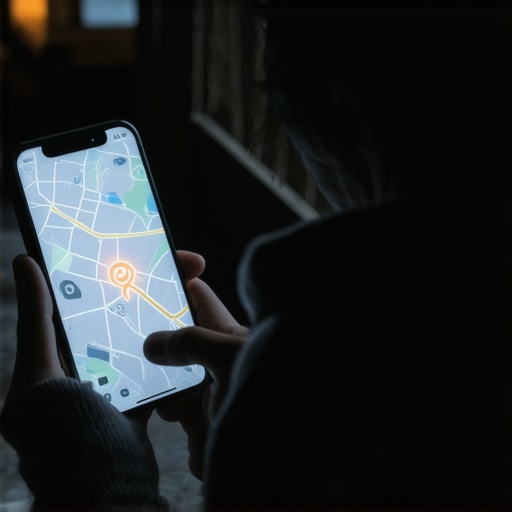
- Audit for “Ghosted” Status: Is your profile actually showing up for “near me” searches on a real mobile device, or is it only visible to your tracking software?
- Primary vs. Secondary Categories: Are you using all 10 available category slots? Ensure your primary category is your most profitable service, not just your most general one.
- NAP Consistency (Name, Address, Phone): Even a small discrepancy in how your address is formatted across the web can create “ranking friction.”
- The 24-Hour Review Rule: Do you respond to every review within 24 hours? Speed of response is a massive signal for the 2026 algorithm.
- Service Area Overlap: If you are a Service Area Business (SAB), ensure your designated areas don’t overlap in a way that triggers Google’s “filtering” algorithm, which hides duplicate-looking listings.
By focusing on google business profile optimization that prioritizes user trust over algorithmic manipulation, you create a profile that is “un-filterable.” When you provide real value, Google’s AI has no choice but to keep you in the top 3 because you are the most helpful answer to the user’s problem.
Conclusion: Moving Beyond the Grid
Green dots are a great start, but they are a terrible finish line. If your google maps rank tracker is showing a victory that your bank account doesn’t reflect, it’s time to stop chasing positions and start chasing intent. The future of google maps lead generation belongs to those who understand that a Map Pack listing is a living, breathing storefront, not a static billboard. Don’t settle for vanity metrics; demand a strategy that turns views into visits and clicks into calls. If you’re ready to fix your silent phone and dominate the local market with a data-driven approach, contact Marco Herrera today for a deep-dive audit of your local presence.