
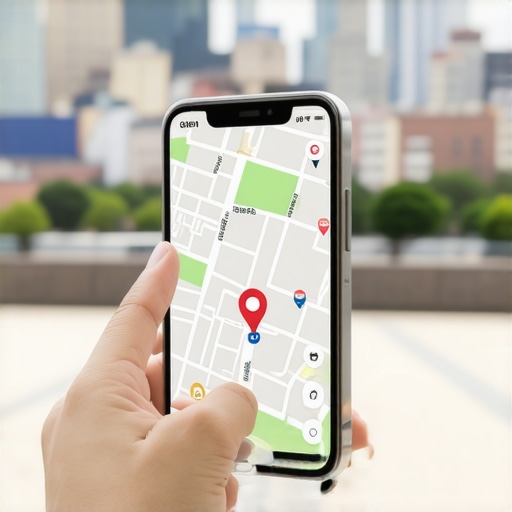
Have you ever watched your Google Maps pin stubbornly float to the wrong building, no matter how many times you drag it back? I remember the first time this happened to me—an awkward dance trying to position my business exactly where it belongs, only to see it drift off again. It was frustrating, confusing, and honestly, a bit embarrassing. That lightbulb moment hit me: there’s a simple, almost foolproof fix that most local business owners overlook—yet it can be a game changer.
Why Your Map Pin Doesn’t Stay Put and Why It Matters
Nowadays, consumers rely heavily on local search results—especially the coveted Google 3 Pack. If your map pin is misaligned or keeps drifting, you’re practically invisible to potential customers searching nearby. This isn’t just an annoyance; it’s a missed opportunity. The good news? Many of these issues are fixable with a straightforward approach. As I learned early on, ignoring these small details can severely harm your local rankings and, ultimately, your bottom line.
Is Fixing Your Map Pin Worth the Hassle?
I used to think so many map-related issues were just minor glitches—until I lost a big client because my pin was pointing to a neighboring business. That mistake taught me a harsh lesson: if your Google My Business (GMB) pin isn’t perfectly aligned, it’s like giving away your address to the wrong crowd. The fix I’m about to share isn’t just easy; it’s backed by proven strategies that top local SEO experts swear by. Curious? Keep reading, because this simple move could drastically improve your visibility.
Early on, I also made the mistake of thinking that verifying my GMB listing was enough. It’s a common error—verifying is just the beginning. You need to actively manage and precisely position your map pin. For more advanced local SEO insights, check out these map pack SEO tips.
Now, let’s dive into that dead-simple move that will bring your map pin into perfect alignment, so your business stands out where it counts—right at the front of the pack.
Pinpoint Your Business Location Precisely
Start by claiming and verifying your Google My Business profile. Ensure all your details are accurate — this forms the foundation for map pin placement. Once verified, navigate to your GMB dashboard and select the ‘Info’ tab. Click on your address and choose ‘Position Marker’ to start adjusting your pin.
Use the Street View Tool for Exact Placement
Click on the map to enter Google Street View. Here, visually confirm your storefront or business location. Drag the map pin directly onto your exact location — signs, doors, or fences help pinpoint the spot. Think of it as dropping a pin with a high-precision drone — visuals guide your accuracy. I once spent an entire morning fine-tuning a client’s pin using street view; the immediate visibility boost made the effort worthwhile.
Adjust the Map for Multi-Story or Complex Layouts
If you operate in a multi-story building or complex, consider marking the ground level or the specific entrance. Use internal signage, floor plans, or even real-world measurements to improve placement. This is especially critical for service-area businesses within malls or office complexes. Remember, Google’s algorithms favor precise location signals, so don’t leave your pin floating in the middle of a block.
Double-Check Your Placement for Visibility
After placement, view your profile as a customer would. Search for your business in a nearby area or on different devices. If your pin isn’t right where customers see your storefront or entrance, reevaluate and adjust. In one case, I repositioned a pin after realizing the business was set slightly off the main road, causing loss of local traffic. Small shifts can make a big difference in the Google 3 Pack rankings.
Ensure Consistency Across Listings
Verify your address details match on all online platforms. Discrepancies can confuse algorithms and hurt your rank. Cross-reference your NAP (Name, Address, Phone Number) across Yelp, Bing Places, and your website. Think of it as aligning all your signals to broadcast the same message — consistency builds trust with Google and local users alike. For step-by-step guidance, explore GMB optimization secrets.
Leverage Advanced Signal Techniques
Beyond placement, integrate other signals like local keywords in your business description, updated photos, and active Q&A sections. Also, engage with customer reviews and respond promptly — this enriches your local signal profile. Remember, Google values how well your business interacts with the community, not just the position of your pin. For more detailed tactics, check out local SEO success strategies.
Stay Vigilant and Iterate
Once your pin is in place and signals are optimized, monitor your rankings regularly. Use tools like Google My Business Insights and local ranking reports to track changes. If your position drops or your visibility wanes, revisit your pin placement and signal signals. Think of it as tuning an instrument — small adjustments lead to harmonious visibility in the Google 3 Pack. Regular maintenance prevents your listing from falling into obscurity amid fierce local competition.
Many assume that optimizing your Google My Business profile, acquiring reviews, and maintaining consistent NAP details are enough to rank in the Google 3 Pack. While these are foundational, there’s a less obvious, yet critical nuance that even seasoned local SEO consultants sometimes miss: the importance of local signal stacking.
Contrary to popular belief, focusing solely on individual signals like review quantity or Google Posts ignores how the interplay between various signals amplifies your visibility. Pushing one element without integrating others could be akin to shouting in a crowded room—your message gets lost.
For example, many practitioners overemphasize citation building, assuming more citations directly correlate with higher rankings. However, without robust interaction signals—such as frequent Q&A updates, photo engagement, and ongoing review responses—the citations alone won’t secure that top spot. Studies, like those from Moz or BrightLocal, consistently highlight that Google’s local algorithm values a holistic approach—multiple, reinforcing signals working in harmony.
Are you enhancing your real-world interactions or just optimizing for Google?
This is where many fall into traps: they pursue technical fixes or backlink strategies without considering the human touch. In the upcoming years, leveraging genuine engagement—like in-store walk-in evidence, local event participation, and community involvement—will become more influential. Google’s increasing emphasis on local mesh signals underscores this trend.
Moreover, one common mistake I see is neglecting signal diversity. Relying overwhelmingly on reviews or check-ins without cultivating visible community interactions or leveraging internal signals (like updated photos, timely Q&As, or product listings) can hinder your rankings. Think of your profile as a symphony—each instrument (signal) must be in tune to produce harmony.
To truly dominate the map pack, you need to combine advanced signaling techniques. This includes ensuring consistent local experiences, optimizing for voice search, and capturing real-time user interactions—often overlooked by standard tactics.
In essence, the real secret sauce isn’t just adding signals but stacking them effectively to create a resilient, multi-layered presence. Ignoring this can leave your profile vulnerable to competitors who understand the subtle interplay of signals—that’s the edge you need.
Have you ever fallen into this trap? Let me know in the comments. For in-depth strategies on mastering local signals, explore these map pack tactics.
Keep Your Map Rankings Solid: Tools and Techniques
Maintaining a top spot in the Google 3 Pack requires more than initial optimization—it’s an ongoing process. To stay ahead, leveraging the right tools is crucial. Personally, I rely heavily on BrightLocal for local SEO audits and tracking rankings, as it provides detailed insights into your position across multiple locations and competitors. Its proximity analysis helps identify any shifts in your local visibility, allowing for timely adjustments.
Another indispensable tool I use is Google Search Console. It offers vital data on how your listings perform organically and helps identify issues like crawl errors or indexing problems that might affect your GMB profile. Regularly reviewing this data ensures your presence remains optimized and compliant with Google’s evolving algorithms.
Automated citation monitoring is another element of my maintenance routine. Tools like Whitespark help track your NAP consistency and alert you to discrepancies across directories, preventing rank erosion caused by inconsistent listings. Ensuring your data stays uniform across platforms helps reinforce your local relevance and authority.
How do I sustain my Map Pack dominance over time?
Consistent engagement with customer reviews is key. I recommend setting up alerts through ReviewTrackers so you can respond promptly to new reviews. Active management not only improves your reputation but signals to Google that your business is active and trustworthy—crucial for long-term ranking stability.
Monitoring your profile with GMB Insights provides real-time data on how customers find and interact with your listing. Use these insights to refine your local content and engagement strategies continually.
In the future, expect AI-driven tools to assist in optimizing local signals automatically, making maintenance even more efficient. Predictive analytics may soon alert you to potential ranking drops before they happen, allowing proactive fixes rather than reactive responses.
For a comprehensive approach, integrating these tools into your routine ensures that your map pack presence remains resilient. Regular audits, proactive engagement, and data-driven adjustments form the backbone of lasting local SEO success. Want a step-by-step process? Check out these map pack tips for more advanced strategies.
Invest in GMB Optimization to Keep Your Edge
Beyond tools, maintaining your GMB profile with fresh photos, updated hours, and accurate categories continues to prove essential. It’s not just about initial setup but nurturing your profile like a living asset. Remember, consistency across all your online platforms reinforces your local relevance and trustworthiness in Google’s eyes.
As the local SEO landscape evolves, so too must your strategies. Embrace new technologies and double down on verified signals like real-time customer interactions, which studies suggest are increasingly influential in ranking algorithms (Google’s developer documentation emphasizes the importance of live interaction signals in local search rankings).
Try implementing a bi-weekly review of your profile’s performance data, and adjust your local signals accordingly. This disciplined approach will keep your business visible when it matters most—the moment local customers are searching for your services.
Over the years working in local SEO, I’ve stumbled upon certain truths that aren’t immediately obvious but can dramatically shift your results. These insights often came from my failures and quick realizations, shaping my approach more than any course or guide ever could. If you’re serious about mastering the Google 3 Pack, paying attention to these less-discussed lessons might be your secret weapon.
What I Learned About Superficial Fixes – Don’t Fall for Tarnished Tricks
Early in my journey, I believed that just verifying my GMB was enough. I thought a few good reviews would elevate me to the top. But experience showed me that surface-level tweaks fade quickly. True success hinges on a deep understanding of how signals interact and the importance of genuine engagement, not just ticking boxes. Remember, Google prioritizes authentic, ongoing interactions over quick fixes.
Cut Through the Clutter – The Power of Signal Synergy
One revelation was realizing that no single signal dominates. Instead, it’s the harmonious stacking of multiple signals — reviews, photos, citations, engagement — that elevates your profile. Ignoring this interplay is like trying to build a skyscraper with only one solid pillar; it won’t hold. To truly stand out in the map pack, your signals must work together seamlessly, reinforcing your relevance and trustworthiness.
Stay Curious: Adapt or Be Left Behind
Google’s algorithms evolve, and the local landscape shifts faster than many realize. I’ve learned never to settle for static strategies. Constantly explore new signals like voice search optimization or real-time customer interactions. Being adaptable and open-minded about emerging tactics keeps your listing resilient against both algorithm updates and rising competitors. Don’t just follow trends—anticipate and lead them.
Curated Recommendations for Mountain-Grade Results
To implement these lessons effectively, I rely on tools like BrightLocal for comprehensive local audits, which reveal hidden opportunities. I also turn to Google My Business optimization guides that delve into the advanced details often overlooked. For monitoring, I use reputation management tools to keep my signals fresh and impactful. These resources form the backbone of my sustained success.
Harness Your Inner Resilience and Keep Moving Forward
Remember, Google 3 Pack domination isn’t about quick wins; it’s about consistency, adaptation, and real engagement. Your willingness to learn from setbacks and refine your approach will set you apart from the competition. Keep experimenting with new signals, foster authentic connections, and never underestimate the power of a well-placed, customer-focused profile. The future belongs to those who see growth as a continuous journey—so start today and stay committed. Thinking about how to refine your strategy? Explore more expert insights at these proven map pack tactics.