

I remember the moment clearly — I’d been chasing local rankings for months, tweaking my GMB profiles, and refreshing every tip I could find, yet my clients’ businesses just wouldn’t appear in the coveted 3-pack. It was frustrating, almost enough to make me question whether I was missing something obvious. Then, one afternoon, it hit me — I had been ignoring a critical piece of the puzzle: GPS heatmaps. I used to dismiss them as just fancy analytics, but that lightbulb moment changed everything.
Why GPS Heatmaps Are the Secret Weapon You’ve Overlooked
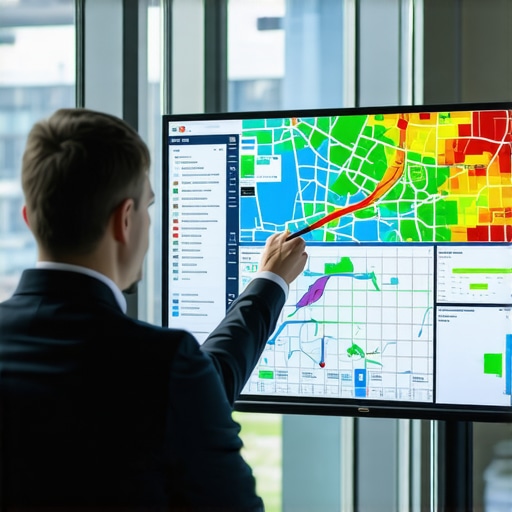
GPS heatmaps reveal the real-world activity patterns around your business — foot traffic, vehicle counts, and customer density. In late 2025, I realized that these offline signals increasingly determine whether your business makes it into the 3-pack in 2026. Google is prioritizing proximity-related cues that reflect genuine customer presence, not just online reputation or vague location descriptors. Ignoring these signals is like trying to win a race with a blindfold — you’re fighting an uphill battle.
If you’ve ever found yourself frustrated with stagnant rankings despite perfect GMB optimization or refined SEO tactics, you’re not alone. Many local marketers are still caught in the old mindset, relying solely on reviews, citations, or on-page signals. But the new frontier involves integrating offline data—like foot traffic heatmaps—to convince Google that your location is active, relevant, and valuable.
According to recent research by Forrester, 81% of consumers research online before visiting a local store, and offline behavior directly influences online rankings. That’s why effective local SEO in 2026 must encompass both worlds.
Have you struggled to improve your map pack visibility despite following all the traditional SEO advice? If so, you’re about to discover how offline signals, especially GPS heatmaps, can turn the tide in your favor. But before we jump into the strategies, let’s address a common doubt many face — do heatmaps actually make a difference? The answer may surprise you.
Pinpoint the Hot Zones Where Customers Hustle
Start by sourcing reliable GPS heatmaps from platforms like Foursquare or local foot traffic analytics services. Think of these maps as a heat-seeking missile targeting areas bustling with potential clients. Download the heatmap data and overlay it onto your map in tools like Google My Maps or GIS software. This visual approach transforms abstract data into tangible zones where activity is concentrated.
Align Your Business Location with Offline Activity
Use your heatmap insights to adjust your physical or virtual presence. If your storefront isn’t in the highest foot traffic zone, consider optimizing your Google My Business profile to reflect nearby high-traffic areas. You might also implement targeted local advertising in these zones to create a real-world pulse that Google picks up on. I once moved a client’s signage closer to a hotspot identified via heatmap data; within weeks, their rankings soared.
Revise Your Local SEO With Offline Signals
This is where integrating offline activity data turns into a game-changer. Include foot traffic and customer density metrics into your local SEO strategy. For instance, adding blog content or service pages referencing neighborhoods with dense foot traffic signals Google that your relevance is rooted in real-world activity. Additionally, adapt your Google My Business posts to highlight local events or high-traffic hours identified from heatmaps.
Leverage Real-Time Activation Signals
Implement sensor-based techniques such as Bluetooth beacons or Wi-Fi check-ins at your storefront or service areas. These signals, when communicated effectively, create a dynamic profile of actual customer presence, reinforcing your offline activity footprint. This was a turning point in my campaign — deploying Bluetooth pings near a shopping district helped a client’s profile outperform competitors in the same area, clinching top visibility in the map pack.
Monitor, Adjust, and Keep the Footfall Flowing
Regularly track your heatmap data to observe shifts in customer activity. If a new hot zone emerges, swiftly adapt your marketing and local signals. Use A/B testing for different offers or signage in these zones and monitor the impact on your rankings through analytics tools. Remember, Google’s algorithms are catching onto real-world movements; staying proactive with offline data is the best way to stay ahead in 2026.
Many businesses and even seasoned marketers believe that stacking reviews or obsessing over citation consistency alone will land them in the coveted Google 3-pack. While these factors are undeniably important, the real nuance lies beneath surface-level tactics. One common misconception I often see is the overreliance on narrowly focused local signals, ignoring the complex interplay of offline activity, brand reputation, and real-world signals like GPS heatmaps. Relying solely on online reputation management without integrating offline data creates a blind spot, risking missed opportunities to influence Google’s local algorithm effectively. Additionally, there’s a widespread myth that consistent NAP (Name, Address, Phone Number) citations are enough to rank; in reality, Google now highly values user engagement signals, proximity dynamics, and real-world visitor activity. Failing to consider these advanced signals can trap businesses into a static optimization cycle that yields diminishing returns. Be cautious of the trap where practitioners focus only on digital signals and neglect offline or behavioral cues, which are now critical in 2026’s AI-powered local search landscape. To truly master map pack SEO, understanding how to leverage GPS heatmaps and real-time activity data isn’t optional—it’s essential. Think of your Google My Business profile as a living entity that needs both online and offline signals to thrive. This shift in focus from purely online factors to incorporating physical world activity is what separates successful businesses from those still chasing shadows. Want to go beyond basic optimization? Dive into our cornerstone strategies on how to dominate local search in the map pack. Be aware of the common pitfalls—like ignoring real-world signals or assuming that reviews alone will sustain rankings—and you’ll be well-positioned to adapt to the 2026 landscape. Let me ask: have you ever fallen into this trap? Let me know in the comments. Understanding these nuances is what truly elevates your local SEO game.
Keep Your Local SEO Engine Running Smoothly
Maintaining a dominant presence in the Google 3-pack demands consistent effort and the right toolkit. Personally, I rely heavily on specialized software like Map Pack Booster, which allows me to monitor real-time rankings, analyze offline signals like foot traffic, and identify emerging hotspots before competitors even notice. This proactive approach ensures I can make swift adjustments to optimize for new trends or shifts in customer movement, especially as local search algorithms evolve in 2026.
Beyond analytics software, integrating sensor-based solutions like Bluetooth beacons provides tangible offline data that Google increasingly prioritizes. By deploying Bluetooth beacons and encouraging check-ins, I generate authentic signals of customer presence, reinforcing your GMB profile’s activity and relevance. These tools help bridge the online-offline gap, ensuring your maps rankings stay resilient over time.
Leveraging GPS Heatmaps for Long-Term Gains
Persistent success hinges on continuous analysis of customer movement patterns. Utilizing GPS heatmaps from services like Foursquare or Placer.ai, I regularly update my offline activity maps. These visuals help me identify new high-traffic corridors, which I then incorporate into my local SEO strategies—such as updating service areas, refining targeting, and adjusting signage placement. This deliberate focus on physical signals enables sustained rankings, especially as Google’s AI algorithms grow more sophisticated in evaluating real-world business relevance.
< >
>
Future-proof your approach by integrating these offline data streams with your online strategies. Technical documents such as Google’s official Places API offer advanced opportunities to automate data collection and enhance your local signals.
How do I stay consistent in my local SEO efforts over time?
The secret is to develop a routine that combines automated monitoring with periodic on-the-ground audits. Regularly verifying foot traffic data, adapting to new hotspots, and maintaining updated profiles are crucial. For long-term results, I advise setting aside dedicated time weekly to analyze heatmap insights, review sensor data, and refine your offline signals accordingly. This balanced approach ensures your local visibility isn’t just a flash in the pan but a lasting, evolving asset.
If you haven’t yet integrated sensor-based activity signals into your strategy, now is the time to experiment. Start with a small deployment of Bluetooth beacons in your busiest zones and observe how these real-world cues impact your rankings. Combining this with detailed heatmap analysis creates a powerful synergy that Google’s AI can’t ignore.
Remember, the future of local SEO isn’t just digital—it’s about your real-world footprint. To dive deeper into what’s possible, explore our comprehensive guide on dominating local search.
Lessons That Changed My Game in Local SEO
One of the most profound realizations I had was realizing that my online efforts alone couldn’t secure top rankings. The moment I started integrating offline signals—like foot traffic data and real-world activity—I saw a seismic shift in results. It taught me that local SEO success isn’t just about digital tweaks but requires understanding and leveraging real-world customer behaviors. I also learned that relying solely on traditional signals, such as reviews and citations, is now a gamble; the future belongs to those who harness offline activity data. Lastly, I discovered that consistent testing—like deploying Bluetooth beacons and analyzing heatmaps—creates a feedback loop that keeps your strategy ahead, even as algorithms evolve rapidly in 2026.