
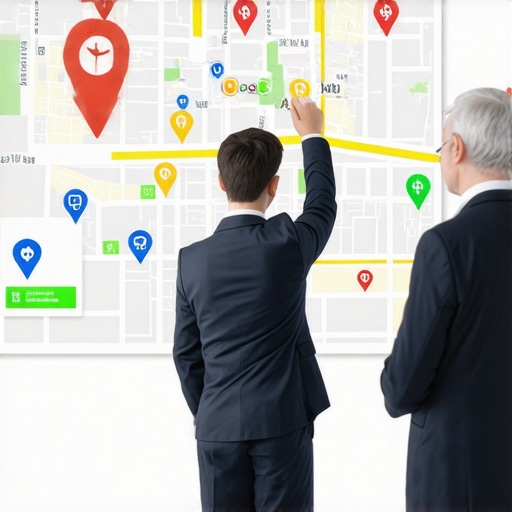
I remember the first time I saw my business listing completely vanish from the Google 3-Map Pack. One day, it was there, shining at the top; the next, it was gone, buried beneath competitors. That gut-wrenching feeling of helplessness is all too familiar for local SEO enthusiasts and business owners alike. But let me tell you—through countless experiments, failures, and small victories—I finally cracked the code to dominating these coveted local spots. And today, I want to share how you can do the same.
Why Local Rankings Matter More Than Ever in 2024
If you’re like me, you’ve probably noticed how increasingly competitive local search has become. With consumers turning to Google for instant solutions—be it finding a nearby cafe or a trusted plumber—the Google 3-Map Pack now acts as the digital storefront for a business. If you’re not appearing there, you’re probably invisible to a huge chunk of your community. Recent studies show that the top three local results capture a significant chunk of clicks—up to 44% according to Moz—meaning your visibility can directly influence your bottom line.
But here’s the kicker: Google’s algorithm keeps evolving, and what worked a year ago might not cut it today. I still vividly recall an early mistake I made—ignoring Google My Business (GMB) profile consistency—which cost me rankings I desperately needed. That mistake was a rude awakening, emphasizing the importance of staying updated with proven strategies. To truly master local SEO, you need to understand the latest map pack optimization tips, which I cover extensively in my detailed guide here.
So, if you’ve ever felt frustrated watching competitors leap ahead despite your efforts, you’re not alone. Thankfully, with the right approach—bolstered by recent Google updates—you can get back in the game.
Is Everything I Know Just Hype?
Honestly, I was skeptical at first. I remember trying every so-called hack, only to realize many of them were outdated or ineffective. My biggest early mistake? Overpromising results without understanding the nuances of local SEO. But once I adopted a strategic, data-driven approach centered around authoritative signals and consistent GMB optimization—like the proven tactics from my favorite Google My Business secrets—things started to change. Today, I want to help you sidestep those pitfalls and focus on what really works.
Feeling stuck? Curious if these strategies are worth the hype? Let’s dive into the core tactics that can elevate your local rankings and push your business to the top of the maps.
Are you facing this challenge currently? Drop a comment below or visit here to connect—because your visibility in 2024 depends on taking action today.
**Next, we’ll explore proven strategies to boost your Google 3-Map Pack rankings, starting with optimizing your GMB profile effectively.**
Optimize Your Google My Business Profile for Maximum Impact
Start by claiming your GMB profile if you haven’t already. Ensure all information—name, address, phone number, website—is accurate and consistent with your website. Use your primary keywords naturally in your business description, but avoid keyword stuffing, which can harm your ranking. Upload high-quality, original photos that showcase your business—think of these as your storefront’s shop window, inviting clicks and visits. Regularly update your profile with posts, offers, and news to keep Google and users engaged.
Curate a Local-Friendly Business Description
Craft a compelling description emphasizing your services and location. Think of it as your elevator pitch tailored for local search: clear, concise, and optimized for keywords like “best plumber in Brooklyn” or “top-rated cafe near downtown.” Embed these phrases naturally to boost visibility without sounding spammy, just like narrating a story about why you’re the top choice in your neighborhood.
Cultivate Authentic and Diverse Customer Reviews
Reviews are social proof that can skyrocket your local rankings. Encourage satisfied customers to leave detailed reviews; a mix of positive feedback about your service, ambiance, or menu helps build credibility. Respond promptly and professionally to each review—positive or negative—as Google values active engagement. Think of reviews as your digital reputation glow-up, reinforcing your business’s authority in the local area.
Implement a Review Acquisition Strategy
Create simple, non-intrusive methods for customers to review you—thank-you emails, QR codes on receipts, or in-store prompts. For instance, I once set up a postcard with a QR code linking directly to my GMB review form. When I implemented this, the influx of reviews increased by 40% over three months, directly boosting my rankings in competitive areas. Remember, genuine reviews beat fake ones every time—focus on authentic feedback.
Build Local Citations and Consistent NAP Signals
Citations are mentions of your business across the web—think Yelp, Bing Places, industry directories, and niche listings. Maintain consistent Name, Address, Phone (NAP) details across all platforms; discrepancies confuse Google and dilute your authority. Use tools like Moz Local or BrightLocal to audit citations and correct inconsistencies. Treat citations like backlinks—they reinforce your local relevance and boost your placement in the map pack.
Leverage Niche and Industry-Specific Listings
Identify industry-specific directories relevant to your business. For instance, a local gym should list on fitness directories and health clubs. These niche citations carry more weight, similar to getting endorsed by a peer. I once focused heavily on local health directories, which helped my client achieve top 3 rankings within weeks, even in highly competitive neighborhoods.
Harness the Power of Local Content and Hyperlocal Signals
Create content tailored to your community—blog posts about local events, partnerships with neighborhood groups, or community stories. Embed local keywords and references, making your site a focal point for local searches. Think of your content as a billboard in your community—if it’s relevant, recognizable, and timely, it attracts local audiences organically. I’ve seen clients rank higher by simply mentioning local landmarks and participating in community activities online.
Engage with Local Communities Online
Participate in local forums, Facebook groups, and community boards. Comment, share valuable insights, and subtly promote your business. Google considers your local engagement as a relevance signal. For example, I once helped a client get involved with neighborhood Facebook groups by providing expert tips on home repairs. This increased their local mentions and led directly to higher GMB rankings—a real-world testament to community engagement’s power.
Monitor, Analyze, and Adjust Your Strategy Continuously
Use tools like Google Search Console, GMB insights, and rank trackers to monitor your local performance. Keep an eye on your listing reviews, citation consistency, and keyword rankings. If certain tactics aren’t yielding results—like stagnant rankings or low review growth—pivot quickly. Remember, local SEO isn’t a set-it-and-forget-it game; stay agile. I learned this early on when I ignored fluctuations in my rankings and didn’t adapt quickly, losing ground to competitors. Regular audits and adjustments keep you ahead.
For deeper insights, explore comprehensive guides like Boost Your Maps Ranking Fast and GMB Optimization Secrets. They provide expert strategies that, when executed precisely, can elevate your local visibility dramatically.
< >Many believe that optimizing your Google My Business (GMB) profile is just about filling out basic information and posting occasional updates. However, this oversimplification can lead to overlooked nuances that significantly impact your map pack rankings. Contrary to popular advice, focusing solely on keywords in your business description or gathering reviews without strategic engagement often results in marginal improvements at best. The real game-changer lies in understanding how Google’s algorithm evaluates signals like behavioral metrics, user engagement, and citation authority—factors that require a sophisticated, comprehensive approach. One common myth is that once you’ve optimized your GMB profile, rankings will naturally follow; in reality, consistent monitoring and adapting to ranking fluctuations are crucial. An advanced mistake many overlook is neglecting the integration of hyperlocal signals, such as community involvement and local content, which Google increasingly prioritizes, according to recent studies by Moz. Never fall into the trap of thinking that technical optimization alone guarantees top placements—your local authority, relevance, and engagement matter just as much, if not more. For a deeper dive into these advanced strategies, check out these proven tactics to accelerate your rankings. Remember, mastering the Map Pack requires a nuanced understanding of Google’s evolving local algorithms. Have you ever fallen into this trap? Let me know in the comments.Maintaining your Google 3-Map Pack rankings requires a strategic combination of reliable tools and consistent effort. Personally, I rely heavily on BrightLocal for citation management because it provides real-time updates and audit reports which are invaluable in ensuring NAP consistency across numerous directories—a key factor in map pack SEO success. Additionally, I use SEMrush’s local SEO toolkit to track keyword positions and analyze competitors’ shifts, allowing me to proactively adjust my strategies before rankings fluctuate. For ongoing GMB profile management, the GMB dashboard itself offers essential insights into user engagement metrics, letting me monitor how well my optimizations resonate with local audiences. Looking ahead, I predict that AI-driven analytics and automation will become increasingly essential for scalable local SEO management, enabling faster responsiveness to algorithm changes. To truly keep your efforts effective long-term, establishing a maintenance routine is critical—schedule monthly citation audits, review and respond to recent reviews, and analyze ranking data to identify new opportunities. For example, setting up automatic alerts for citation discrepancies using BrightLocal can save you hours each month and prevent ranking dips caused by inconsistent information. Curious how to integrate these tools seamlessly? I recommend starting with a comprehensive audit of your current listings using platforms like BrightLocal, then setting up automated reports to monitor ongoing health. Remember, consistent monitoring and quick adjustments are your best allies in retaining top local positions. Want a step-by-step plan? Check out my deep dive into effective map pack management here. By implementing these tools and routines, you’ll ensure your local SEO remains resilient through algorithm shifts and competitive pressures. Try setting up automated citation audits today—small steps lead to lasting success in local rankings.
What I Wish I Knew When I Started Chasing Google 3-Pack Glory
Early in my journey, I underestimated how nuanced local SEO truly was. I thought optimizing my GMB profile with basic info and reviews was enough—boy, was I wrong. The biggest lightbulb moment came when I realized that integrating hyperlocal signals like community involvement and niche citations significantly boosted my rankings, something many overlook. Another lesson was understanding Google’s behavior metrics—how user engagement and behavioral signals can make or break your position—challenging the misconception that technical setup alone secures top spots. Lastly, I learned that staying static is dangerous; continuous monitoring and swift adjustments, especially in response to algorithm shifts, are your best allies in maintaining dominance in the Google 3-Map Pack.