What Your SEO Consultant Isn’t Telling You About Those Monthly Reports
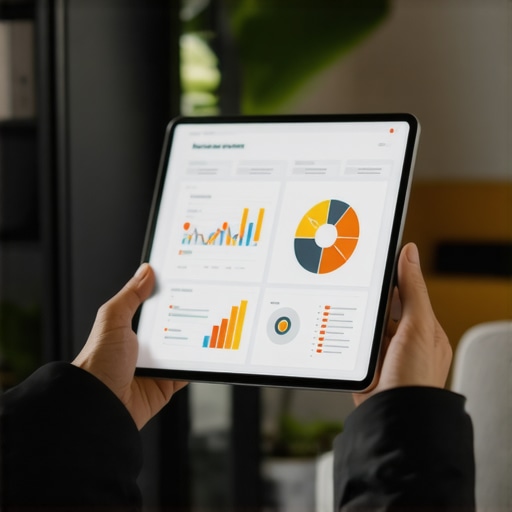
It’s the first Tuesday of the month. You open your inbox to find a glossy, 20-page PDF from your local SEO agency. It’s a sea of green: upward-pointing arrows, “Position #1” badges, and a graph showing thousands of “Impressions.” On paper, you are winning the internet. But then you look at your phone – it isn’t ringing. You check your bank account – the revenue hasn’t budged. This is the Reporting Gap, and it’s the dirty little secret of the local search industry.
As a Google Business Profile (GBP) Product Expert, I see this every day. Business owners are being fed “vanity metrics” to justify monthly retainers, while the actual health of their local presence is flatlining. Most agencies will tell you that SEO is a “long game” and that it takes six months to see real movement. While there is a grain of truth to that, research by Dan Skaggs shows a different reality: the top 1% of local businesses don’t wait six months. They treat google business profile seo as a 28-day sprint. They optimize for completeness in week one, service depth in week two, social proof in week three, and iteration in week four. If your consultant is still telling you to “just wait” after three months of “green” reports, you’re likely being ghosted by an algorithm.
In this guide, I’m going to pull back the curtain. We’re going to talk about why your rank tracker is lying to you, which metrics actually pay the bills, and how to tell How to Tell if Your Local SEO Consultant Is Just Automating Your Reports before you waste another dime on “fluff.”
II. The Rank Tracking Lie: Why “Position #1” Might Be a Ghost
If your monthly report shows a static screenshot of your business at #1 for your primary keyword, I have bad news: that rank might not exist for your customers. One of the most significant shifts in local search over the last few years is the hyper-personalization of the Map Pack. As Sterling Sky has documented extensively, Google results are now dictated by a “Proximity Trap.”
A traditional google maps rank tracker often pings Google from a data center or a fixed IP address. It shows you what a user sees at that exact coordinate. However, a customer standing two blocks to the north might see your competitor at #1 because they are 500 feet closer to that user’s GPS signal. If your consultant is only reporting on a single data point, they are hiding the “Proximity Fade.”
In 2026, ranking in your own parking lot is easy. The real work is expanding your “ranking radius” into the next neighborhood or the adjacent zip code. If you aren’t seeing a heat map or a grid-based tracking report, you aren’t seeing the truth. You might be #1 at the agency’s office, but a “ghost” everywhere else. This is why you need to understand Why Your Ranking Tracker Shows You in the 3-Pack When Your Customers See Nothing. Real local authority is about dominance across a geographic area, not a single pixel on a map.
III. Vanity Metrics vs. Value Metrics
Most monthly reports are padded with “Vanity Metrics.” These are numbers that look impressive but have zero correlation with your bottom line. The biggest offender? Photo Views.
Google Business Profile reports often highlight “Photo Views” because the numbers are massive. You might see 10,000 views and think your brand is exploding. In reality, those views are often triggered by bots, scrapers, or users accidentally scrolling past your images in a generic search. As the team at VCD Studio often says, “Growth happens when attention turns into action.” If those 10,000 views don’t result in a single click, they are worthless.
To truly rank google business profile listings for profit, you must pivot to Value Metrics:
- Direct Phone Calls: Not just “clicks to call,” but actual tracked conversations.
- Request a Quote Clicks: High-intent actions that lead directly to a lead.
- Driving Directions: The ultimate signal of physical intent for brick-and-mortar stores.
- Booking/Reservation Clicks: Direct revenue-generating interactions.
If your report doesn’t distinguish between a “view” (passive) and an “interaction” (active), your consultant is hiding behind the noise. You need to Stop Counting Impressions and Try These 4 Tweaks for Real Map Lead Generation to ensure your budget is being spent on converting customers, not just collecting digital “likes.” Using the right local seo tools will allow you to filter out the bot traffic and focus on the human beings trying to find your services.
IV. The Automation Trap: Spotting “Bot-Work”
The local SEO industry is currently plagued by “low-cost” agencies that charge $300 – $500 a month. At that price point, it is mathematically impossible for a human to do manual work on your account. Instead, they use scripts. They automate your citations, they automate your “updates,” and they use AI to spin generic responses to your reviews.
This “Bot-Work” is easy to spot if you know where to look. Does your monthly report only show a list of new citations on directories you’ve never heard of? That’s a red flag. In 2026, Google puts almost zero weight on low-tier directory citations. What Google cares about are “Live Signals.”
A high-level consultant provides “Proof-of-Action.” This includes:
- Uploading new, geo-tagged photos of actual jobs completed this month.
- Responding to reviews with specific, non-templated keywords.
- Seeding the Q&A section with questions real customers are asking.
- Updating “Services” and “Products” to reflect seasonal changes.
If your consultant isn’t performing these 3 Vital Tasks for Your 2026 Local SEO Consultant [Stop Botting], they are just a glorified software subscriber. You can run a google business profile audit tool yourself to see if the basic optimization “Live Signals” are actually being updated or if your profile has been stagnant for months.
V. 2026 Specifics: The New Signals Your Consultant Is Missing
The local search landscape in 2026 has moved far beyond “NAP consistency” (Name, Address, Phone). If your consultant is still talking about NAP as their primary strategy, they are living in 2018. Today, Google’s AI-driven search agents are looking for “Local Mesh Signals” and “Interaction Scores.”
One of the most critical new features is the “Verified Open” badge. Google is now using AI to cross-reference your stated hours with real-time location data from users and even AI-driven phone calls to your business. If your business says it’s open, but no one is there, your ranking will tank instantly. Furthermore, we are seeing the rise of 3D Spatial Listings. Businesses that upload 360-degree tours and spatial data are receiving a massive boost in the Map Pack because it provides a “Verified Reality” signal that AI bots can’t fake.
If your consultant isn’t discussing how to improve google maps ranking through these advanced “Interaction Scores,” you are falling behind. Google’s algorithm now prioritizes listings that have a high “velocity” of interaction – meaning people aren’t just finding you, they are engaging with you repeatedly. You should be looking for these trends in your reports, specifically under 7 Local SEO Trends for 2026 That Actually Matter for Small Businesses.
VI. The “Hard Questions” Checklist
It’s time to take control of your monthly meetings. Don’t let the account manager steamroll you with charts. Instead, ask these four specific questions to gauge the actual value of their google maps ranking service:
- “What was our conversion rate from map views to phone calls this month, and how does that compare to the industry average?” (If they don’t know the conversion rate, they aren’t tracking leads.)
- “Which specific geographic ‘cold spots’ did we target this month, and what ‘Proof-of-Action’ was taken in those areas?” (This forces them to explain their proximity strategy.)
- “How are we optimizing for the ‘Verified Open’ and AI-filter signals that Google introduced this year?” (This tests their knowledge of current trends.)
- “Can you show me the non-automated, custom responses to our top three reviews this month?” (This checks for bot-work.)
For a deeper dive into how to hold your agency accountable, check out my list of 4 Specific Questions for Your 2026 Local SEO Consultant. If they can’t answer these, it’s time to reconsider the relationship.
VII. Conclusion: Demand Proof of Life
Stop accepting “pretty PDFs” as proof of progress. In the high-stakes world of local search, a “green report” that doesn’t generate revenue is just an expensive hallucination. You need a partner who understands that the goal isn’t just to rank, but to dominate the local market through authentic, high-velocity signals.
If you want to stop the guesswork and start seeing real results, you need to use the same google maps lead generation strategies used by the top 1%. It’s time to move past vanity metrics and demand “Proof-of-Life” for your business. Don’t just hope to appear on the map – ensure you rank higher on google maps by focusing on the value metrics that actually matter.